Classroom cultures are sustained through rituals and routines, created over time, by a teacher and their students. Every day, throughout a school year, rituals and routines are the thread that hold the pieces of the “learning” quilt together. The consistency of such practices implicitly communicates: This is how we care for one another and our space, value and push one another’s thinking, take risks to stretch our learning, listen to one another, concentrate, play, live, and work together as a community.
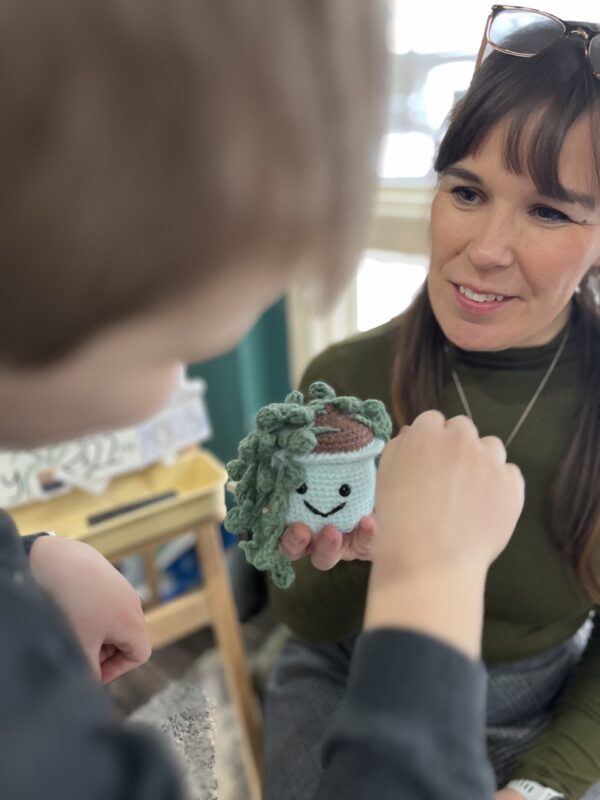
For example, every morning, in SK’s Young 5s/Kindergarten classroom, the teacher and her students engage in a predictable morning routine: the student director-of-the-day assists the teacher with the flipping of the calendar to today’s day of the week and date, reading the calendar, recording and counting (by tens and then by fives) which day of the school year we’re on. (We are almost at the 100th day of school!) As a class, they read the morning message, and the director-of-the-day assists with acting out the watering their class plant, a crocheted succulent named Cutie (pictured above, made by @lazydaisycreates).
Whereas habits are things we do without much thought, rituals and routines are thoughtful. They are imbued with intention and purpose. In the above example, the teacher and her class have a “morning routine,” and within that routine, there are rituals in which she and her students engage. The watering of the plant is one such ritual; it’s special and specific to that classroom community.
Children rely upon the rituals and routines we co-create with them for a sense of structure and predictability. Structure and predictability provide a sense of safety, and when learners feel safe, they can be spontaneous and take the risks necessary for growth.
Where might you need or want a new ritual or routine in your and/or your child’s life? How might such a routine help them take the next step in their personal growth journey?