Carrie Symons, PhD

Teaching, Learning, & Educational Leadership

Page 2 of 7

How Performing for an Audience Cultivates 21st Century Skills

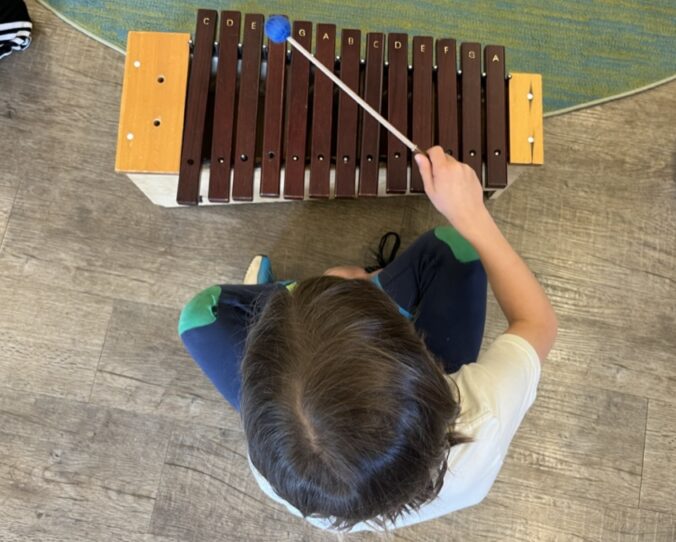
Winter has arrived in full force, with below freezing temperatures in Michigan, and Summers-Knoll students are in the final stages of preparing and rehearsing for the Winter Arts Festival, which will be held in the lovely auditorium of our neighborhood Vineyard Church on Friday, December 13th @ 6:00 PM. As I watch SK’s music and art teachers, Ms. Alexa and ArtMary, guide students through the creative process – from nascent idea to final product – I am reminded of how much people learn through being engaged in the arts.

My father is a Professor Emeritus of Theatre, so from a very young age, I was immersed in the performing arts. My first role in a play was Peaseblossom in Shakespeare’s A Midsummer Night’s Dream at age five. Throughout my elementary, middle, and high school years, I performed in my school choir and theatre productions.

In college, I majored in theatre and earned a BFA in Performance Studies from the University of Colorado, Boulder where my father was the chair of the theatre department. When my father spoke with prospective students and parents about majoring in theatre, he addressed a common question: What can my child do with a theatre degree? While he didn’t use the term, his answer included 21st Century Skills, but it went beyond that too.

Performing in front of a live audience requires critical thinking, creativity, collaboration, communication, flexibility, leadership, initiative, productivity, and social skills. When the curtain rises, you have to be ready, and weeks of preparation and rehearsal go into getting to that point of readiness. Visual artists also create pieces for a show. As an artist, you have a vision, a commission, a commitment, a deadline that needs to be met, a gallery that’s counting on your pieces, or a museum that is depending upon your installation for its opening.

As artists, we do not create alone. It is the ensemble that makes the work possible. No one is insignificant. From the person who designed the lights to the person who cues the lights to the person who operates the lights, from the costumer who designed the costumes to the stagehands who assist the actors with costume changes backstage during a performance, from the sound designer to the people cueing and running sound, from the musicians in the pit to the conductor, from the actors on stage to the director that guided the whole production from rehearsal to opening night – not to mention the stage manager and set designer, tech crews, ushers, box office manager (I’m sure I’m forgetting someone) – everyone is essential. Each person has an important role to play, albeit different and diversified.

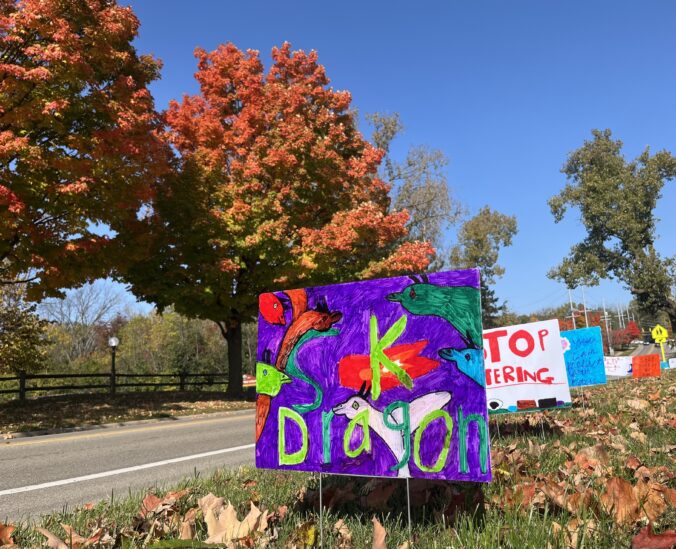
At SK, as a project-based learning school, public performances, demonstrations, engagements, publications, or displays are an essential part of the teaching-learning cycle. Not only do students have the opportunity to perform for an audience at our winter and spring arts festivals, different classes present or perform every week at our Friday morning meeting: Dragon Time. SK students become incredibly accustomed to, and comfortable with, preparing to share their work – and sharing their work – with a live audience. When the “curtain rises,” they are ready.

When students write, present, or perform for an authentic audience outside of school, the work they do in school becomes more meaningful. They recognize that their learning has importance and significance to others as well. Through project-based learning, they have regular opportunities to connect their learning to – and engage with – the “real” world.

So as we watch SK students perform in the winter arts festival, present at a Friday morning Dragon Time, host parents in their classrooms for project culminations, or display their visual art/creative process, it’s important to remember we (as an audience) play an important role too – without an audience, there would be no show! The reciprocity between artists and audiences fuels the creative process and makes all the hard work worthwhile. We create for the inherent reward of creating, and we also create to share. As such, whether we are the performer/artist or the audience member, we all play a part in the creative process and in encouraging each other’s creative expression.
No Such Thing as Perfection

Last week, I had the opportunity to engage the first and second graders in a read aloud of the book M is for Melody: A Music Alphabet by Kathy-Jo Wargin. When we got to the letter I, the text read:

“And I is for instrument. Which one will you play? When you join the band, you’ll have fun every day! Practice makes perfect.”

Immediately, several students challenged the notion of “perfect.”

“There is no such thing as perfect!”

“It’s not about being perfect; it’s about practice.”

“Practice doesn’t make perfect; it just makes you better.”

Clearly, SK’s first and second graders were applying their critical reading skills; they were challenging the author’s assumptions; they spoke of perfection as if it were an extinct construct. Their insistence and critique was a reflection of what they had already learned—at the young ages of 6 and 7—about the importance of a growth mindset.

In her book Mindset: The New Psychology of Success (2006), psychologist Carol Dweck distinguishes between a fixed mindset and a growth mindset:

A person (or organization) with a fixed mindset views intelligence, talent, and ability as innate and fairly static—you’ve either got it or you don’t; you can learn new things, but you can’t really change how intelligent/talented/able you are.

In contrast, a person (or organization) with a growth mindset views intelligence, talent, and ability as dynamic and malleable—if you can’t yet do something, you can work toward learning how to do it; regardless of how much intelligence/talent/ability you already have, there’s always room for development and expansion.

From a growth mindset perspective, even mindsets themselves are not fixed. We can turn a fixed mindset into a growth mindset!

If perfection was truly attainable, this would imply that there’s an end to growth. It would also imply that there’s one agreed upon idea of perfection. The first and second graders who voiced their strong opinions in opposition of the notion of “practice makes perfect” are wise young humans—they already know that perfection is not some fixed ideal to be attained, but rather, we should reach, stretch, and practice so that we grow.

If growth is goal, versus some notion of perfection, then the risk-taking necessary for learning becomes more tolerable. Mistakes and failure can be reframed as essential feedback for growth, and we can celebrate our failures because they are evidence that we are reaching for something beyond our current ability.

Granted, there are systemic and structural injustices that can’t simply be overcome with a growth mindset. Valuing a growth mindset—and even adopting one—doesn’t ensure achievement and success. It’s important to acknowledge that individual people with mindsets do not exist in isolation; people are situated within complex, chaotic, sociocultural, socioeconomic contexts, which must be navigated and negotiated. It’s important to not oversimplify or generalize about the potential benefits of a growth mindset.

But I was inspired by SK’s first and second graders who already know that “there’s no such thing as perfection.”

At Harrington Elementary in Denver, Colorado where I started my teaching career, we had a saying: Practice makes permanent. I like this twist on this old adage. It fits well with SK’s teachers’ approach to planning and enacting project-based learning: we’re focused on cultivating pedagogical, project-based habits. We practice to develop habits. When something becomes habitual, our mind is freed up to think about even more complex ideas; our creative, physical, and intellectual potential expands.

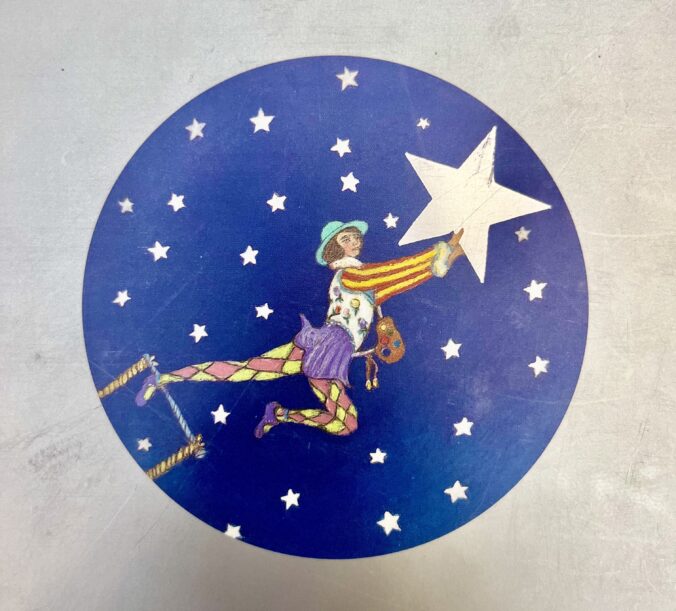
Here’s to reaching for the stars, imperfectly and playfully, just to see how much we can grow.

[Above art by Cooper Edens from his book Add One More Star to the Night (2003)]

Taking Time for Awe

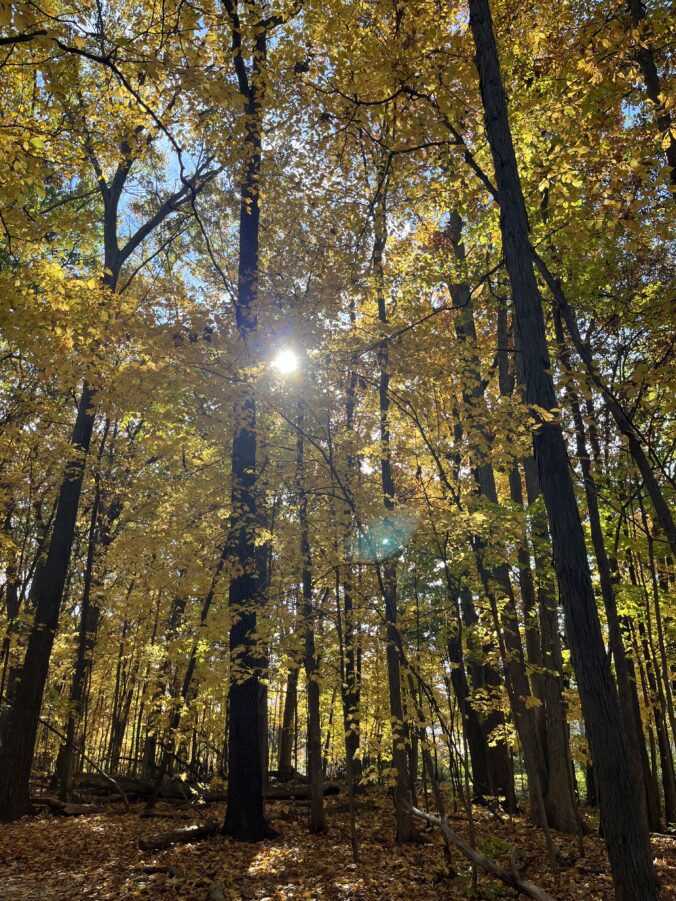
On Sunday, November 3rd, our clocks “fell back” – we were given an additional hour in the day. More time to enjoy the changing color of the leaves. More time to savor the warmth that lingers in the air. More time to appreciate the brilliance of the blue sky, a backdrop to black branches and golden leaves that wave in the breeze like the tips of flames.

More time to hold a door open for someone behind you, offer a hug to a loved one, smile at a stranger, or say “thank you” to the person behind the counter at the grocery store. More time to recognize how much these seemingly small acts of kindness really do matter. Not only do they matter – they are even a source of awe. And through experiencing awe, we are reminded that to be alive in this moment – our life – is fleeting and precious.

In his book, Awe: The New Science of Everyday Wonder and How it Can Transform Your Life (2021), Dacher Keltner helps readers understand what awe is and the importance of it in our daily lives. Keltner and colleagues’ research led to inspiring findings:

“What most commonly led people around the world to feel awe? Nature? Spiritual practice? Listening to music? In fact, it was other people’s courage, kindness, strength, or overcoming” (p. 11).

Teaching and learning require these very things: courage, kindness, strength and overcoming. Bright minds and tender hearts are nurtured through learning communities that intentionally embrace diversity, engage in challenging work, and foster a culture of care and respect. Teachers and students create awe-inspiring places; seemingly small acts of moral beauty take place in multiple moments throughout the school day. Even struggle is necessary and productive. Nature reminds us that some of the most beautiful, awe-inspiring aspects of life are embedded in cycles of transformation.

As Mary Oliver writes in her poem “A Song for Autumn“:

In the deep fall
don’t you imagine the leaves think how
comfortable it will be to touch
the earth instead of the
nothingness of air and the endless
freshets of wind? And don’t you think
the trees themselves, especially those with mossy,
warm caves, begin to think
of the birds that will come – six, a dozen – to sleep
inside their bodies? And don’t you hear
the goldenrod whispering goodbye,
the everlasting being crowned with the first
tuffets of snow? The pond
vanishes, and the white field over which
the fox runs so quickly brings out
its blue shadows. And the wind pumps its
bellows. And at evening especially,
the piled firewood shifts a little,
longing to be on its way.

Through all the changes this fall season inevitably brings, may we continue to make the world an awe-filled place for ourselves and one another.

How Schools Foster Students’ Sense of Agency Within a Community

It’s October 25th in the year 2024, a presidential election year in the United States. With election day just 10 days away, a heightened sense of anticipation pervades our media outlets’ airwaves. (Reminder: There is no school for students at Summers-Knoll on election day, November 5th.) How do educators help children develop an understanding of governmental and political processes in age-appropriate ways?

In school, students learn how to work together with their classmates to form a classroom community; the classroom community is co-constructed by the students through the leadership of the teacher; the school community is co-constructed by the teachers and the students through the leadership of its administrators. As mentioned in blogs from earlier this year, at SK, teachers spend the first several weeks of the school year building their classroom communities, establishing norms and class agreements, and building relationships. With teachers’ guidance, over time, students learn how to work independently and together in pursuit of their academic and social-emotional goals.

When entering school in the early grades, children relate to the world from self-centric point of view. Young children are driven by their personal wants and desires, and in school, they leverage myriad opportunities to develop linguistic repertoires that enable them to articulate those wants and desires, play with friends, communicate their opinions and feelings, ask questions, express their ideas, participate in group discussions, and solve problems.

As children move through the elementary grades, they become more aware of the world around them; they begin to de-center themselves and turn their gaze outward. They start to realize – and become more interested in – the reciprocal nature of friendships and relationships with other people. They become much more attuned to their own agency, their ability to choose, notions of “right” vs. “wrong,” and “fair” vs. “unfair.” They develop tools and skills that enable them to communicate their needs and opinions, listen to and understand other people’s perspectives, empathize, disagree, recognize and respect differences, and navigate interpersonal conflicts peacefully when they arise.

With this deeper sense of self within a landscape of a broader world that is governed by both nature and human-made systems, children begin to become conscious of how their individual actions, choices, and participation affect their relationships and their broader communities. Teachers capitalize on this expanding awareness through incorporating governance practices, content, and vocabulary into their instruction (e.g., voting to participate in democratic decision-making, the meaning of words like “majority,” the difference between a rule and a law, petitioning for change, writing opinion pieces, presenting proposals, distinguishing between fact and opinion, critically analyzing texts and works of art, debating hot-topic issues).

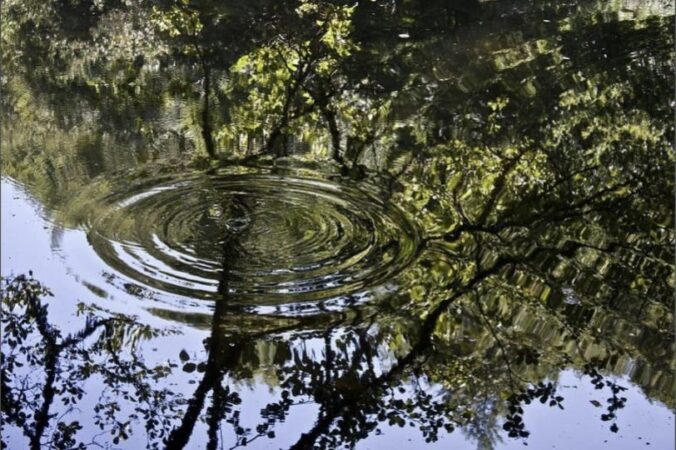
In the upper grades, students learn about the history of local, state, and federal systems of governance and how they currently function in the U.S. as well as other countries’ forms of – and approaches to – governance. Older students’ gain increased opportunities for community service and leadership among their peers. Like concentric circles rippling outward from a stone that’s been thrown into a pond, as children mature, both their opportunities and responsibilities expand in school and at home.

Ideally, throughout their years in school, students are provided an abundance of opportunities to develop the knowledge, skills, and strategies necessary to become critical thinkers and conscientious human beings who care about the world and who participate in society through exercising their rights, freedoms, and agency to choose. The future is theirs.

Reflections Upon the First Quarter

And just like that, we are at the end of the first quarter of the 2024-25 school year. A closing of one chapter and a transition to the next inspires reflection upon where we started and where we are now.

As I’ve watched teachers and students build their classroom communities and engage in their first projects of the year, I’ve noticed a trend across the grade levels: understanding ourselves and other people’s perspectives. Who am I? What are the communities to which I belong? How do we, as individuals, work and learn together as a community? How do I get to know other people? How do we come to understand and respect other people’s perspectives, perspectives that differ from our own?

The school year starts with establishing our classroom and school community norms and agreements, but we don’t stop there. It’s not enough to know ourselves and those with whom we spend the majority of our time (e.g., our peers, our family members, our friends). We need opportunities to think beyond ourselves and what’s familiar. When we engage with people whose lives, experiences, and perspectives differ in small and large ways from our own, we have the opportunity to recognize (or remember) that we are part of a beautifully diverse world. Our assumptions and biases are challenged, and our horizons expand. In turn, through practicing critical reflection, we are personally transformed. And while such transformative learning is launched in the first quarter, it doesn’t stop there – this is a year-long, and life-long, process.

As faculty, we have been deepening our own learning in the domain of Climate Science, which has reinforced the importance of looking beyond the surface. When we dig deeper, literally, into the ground upon which we walk and closely examine the soils that we use to plant our trees and gardens, we see there’s an abundance of microscopic organisms engaged in chemical and biological processes that sustain all living things. Diversity of microorganisms is essential for the health of our soil – an overabundance of one type of organism depletes the generation of life-giving nutrients that plants need to grow.

With the turn of the seasons and the transition from the first quarter to the second, it’s time to take stock, look back, and look ahead. It’s important to celebrate the ways in which we’ve grown, recognize new knowledge that’s been constructed, and think about where we’re headed.

Like the leaves on the trees, change is inevitable. Experience in and of the world is also inevitable – inevitable and valuable. But growth is optional. Growth requires an intentional, iterative cycle of goal setting, engagement in the pursuit of our goals, and critical reflection. This is how we individually, and collectively, learn and grow continually and holistically.

Grounding Ourselves in the Science of Soil

This week at Summers-Knoll, we had our first early release/half-day, professional learning session for teachers on Wednesday, October 9th. (Thank you to the aftercare staff who made it possible for homeroom teachers and specialists to engage in this learning together.) We used this time to take a deeper dive into our schoolwide, Climate Science initiative with the founder of Summers-Knoll school, Ruth Knoll.

Over the past two years, Ruth has been taking her own deep dive into the science of soil. As a dedicated student of the Soil Food Web School, founded by Dr. Elaine Ingham, Ruth has been studying the science of thermal (aka hot) composting.

https://www.soilfoodweb.com/

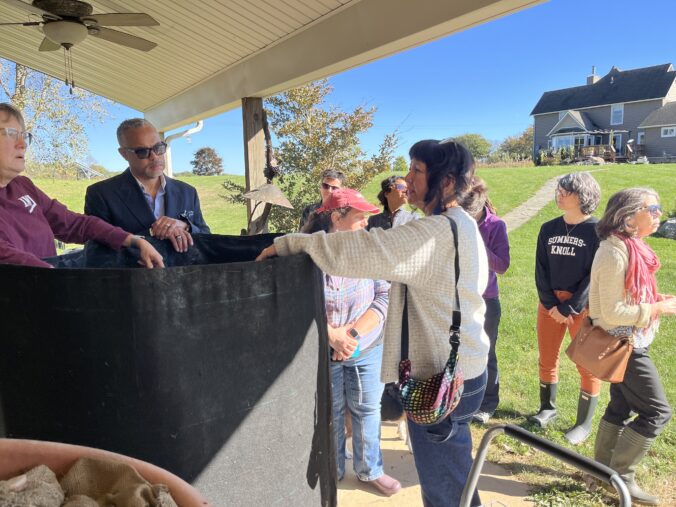
From examining microbial life and fungi under a microscope to giving us a tour of various types of composts (e.g., Johnson-Su, Bokashi, Vermicompost) in various stages of development, we learned about the critical importance of compost in the broader scope of climate science as well as how to create thermal composts using a standardized formula of 10% high nitrogen, 30 % nitrogen, 60% carbon.

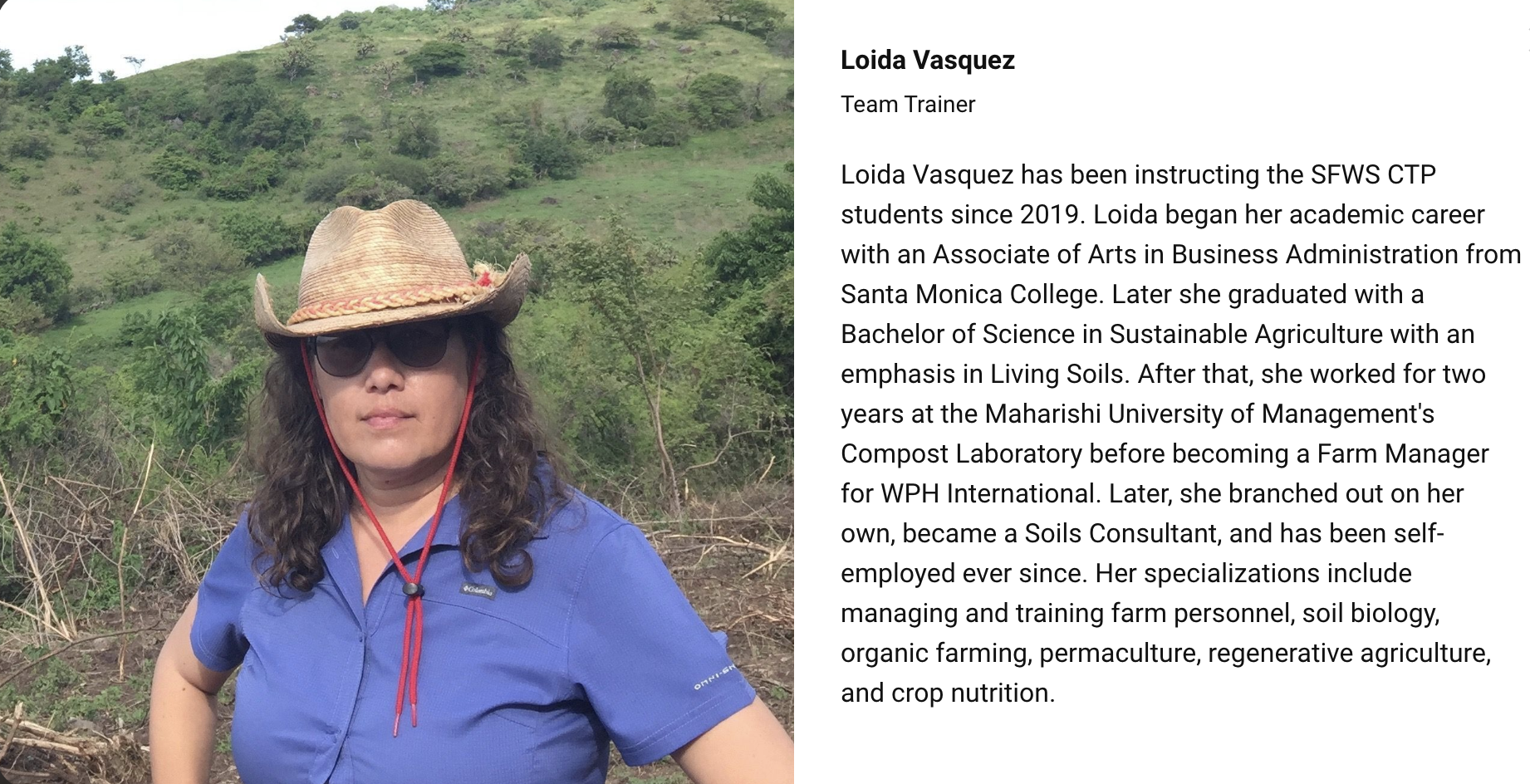
Prior to our field trip to Ruth’s house on Wednesday, we met virtually with a Soil Food Web consultant, Loida Vasquez, who works in the agricultural industry with farmers across the U.S., Mexico, Costa Rica, and Colombia.

Loida taught us about the different types of microbial life in a healthy, nutrient-rich compost, their functions, and their critical role in plant life and the life of our planet.

When teachers’ build their domain knowledge, they, in turn, can create more meaningful opportunities for student learning. Through translating domain knowledge into curriculum and instruction for students, teachers’ pedagogical content knowledge deepens. For example, if you wanted to better understand the dust bowl history of the U.S., one of the best ways to do so would be to teach someone else about it because to teach someone else about something, you need to have both the domain (aka content) knowledge as well as practical knowledge of how to create meaningful and engaging experiences through which students learn. As one of my yoga teachers, Baba Hari Dass said, “Teach to learn.”

Thank you, Loida and Ruth, for partnering with us on this journey. At Summers-Knoll, we take project-based learning seriously. We recognize the importance of continually deepening our knowledge as educators in ways that align with how we want students to learn as well: surface, deep, and transfer. If a pedagogical approach, such as PBL, is going to foster transformative learning for students, teachers need to also have transformative learning opportunities.

“We need a new story about belonging” – john a. powell

Diversity, equity, inclusion, and justice (DEIJ) are not new ideas, but within the past decade – across public and private sectors – organizations, institutions, and companies have increasingly made it an explicit part of their mission and/or vision. Despite the importance of each of these constructs, their meanings are often assumed. Like many acronyms, DEIJ has become ubiquitous, and ubiquity often reinforces assumptions. But for an organization to genuinely embody and reflect these ideals, they need to be kept alive, iteratively interrogated and (re)centered in our conversations about who we are and why we do what we do.

Recently, there has been movement away from the word “inclusion” to “belonging.” Born in Detroit, john a. powell is the Director of The Othering & Belonging Institute at the University of California, Berkeley. He is a renowned social justice activist, educator, and author. As Professor powell helps us understand in his book, Racing Toward Justice, inclusion suggests some sort of gatekeeping – that we somehow need to be given permission (by someone else) to be a part of a community. In contrast, “belonging” reflects the fact that we are all human. By the very nature of our humanity and each person’s inherent dignity, we all belong. Now the question is:

How do we create spaces that reflect this truth?

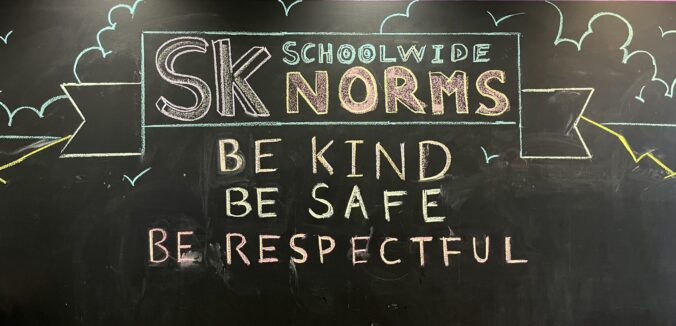
Each school year with each new class of students, teachers and students create classroom agreements. At Summers-Knoll, in 2023-24, those classroom agreements were collected, analyzed and synthesized into three schoolwide norms: Be kind. Be safe. Be respectful. At today’s Dragon Time (our whole school, Friday morning meeting), teachers shared their processes of establishing agreements in their classrooms and students shared examples of how their actions and words reflect our schoolwide norms.

Parents, caregivers and families are a critical part of a school’s culture and they, too, must experience a feeling of belonging.

The fall 2024 issue of the Independent School magazine focused on the vital role of parents, and schools’ relationships with parents, in independent schools. In her article, Debra P. Wilson, the president of the National Association of Independent Schools, wrote:

“Is it objectively harder to parent today than it was in, say, 1981? In a recent Pew Research report, 62% of parents say it is somewhat harder than they thought it would be. Another 26% says it’s a lot harder. 

While I should, and do, cut my own parents some slack for some of the more laissez-faire parenting styles of the ’70s and ’80s, I’d say it at least feels harder to be a ‘good parent’ today.   

Parenting is no longer just about raising well-fed and well-mannered kids who work hard in school and ultimately find a way to support themselves. The flood of information available to us today means we know all the risks ‘out there’ in the world, including in the virtual world. The world also feels that much more competitive, and we’re more aware of the importance of our children’s inner lives, their emotional and relational well-being. All this good and important information raises the stakes for our parenting choices. The metaphorical bumps and scrapes feel much more consequential. 

In this context of increased parental anxiety and societal polarization, independent schools have an important role to play. We can use the uniquely close environments we have built at our schools to better understand parents and partner with them to help our kids through challenging moments. We can build trust with parents so that they better understand the school’s role in looking out for individual students. Ultimately, we can create places of belonging for not just the students in our care but for their parents as well.”

Let’s tell a new story about belonging, one that permeates the walls of the school and reshapes who we are, our communities, and how we help one another remember the importance of honoring each person’s inherent worth and dignity across sectors, spaces, and time.

Curriculum Design: The Underpinnings of Instruction

This week, on Thursday September 26th, we had our 2024-25 Curriculum Night at Summer-Knoll School. It was the first in-person Curriculum Night since 2019. While remote Curriculum Nights on Zoom enable parents to join the event from the comfort of their own homes, an in-person Curriculum Night offers unique advantages, which we witnessed last night: parents gathering together in the spaces that the children inhabit during the school day, hearing directly from teachers in real-time and visiting their classrooms, experiencing the positive collective energy that’s created through coming together as a community with intention, purpose, and commitment to our children’s education.

As Margaret Wheatley said, “Never underestimate the power of a small group of committed people to change the world. In fact, it is the only thing that ever has.”

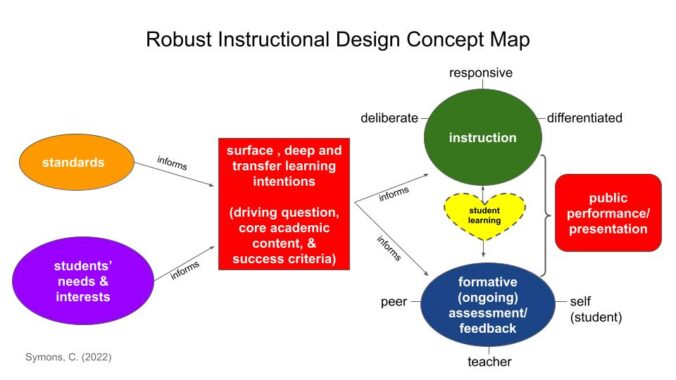
Curriculum design is a long-term, ongoing, iterative, dynamic process. As I shared in my welcoming remarks at Curriculum Night last night, teachers’ curriculum design begins well before the start of a school year. In the middle of one school year, teachers are already thinking about and planning for the next. As teachers are constantly working toward their curricular and instructional goals – for their current class and each individual student – they are reflecting upon their teaching practice and integrating what they are learning about their students through their formative assessment(s) to inform their instruction (e.g., what’s working, what needs tweaking, how to pivot and for whom and when, what they may do differently next time they teach a particular concept, skill, or strategy).

But what, exactly, informs curriculum design? The above graphic illustrates a response to this question. At SK, teachers’ ongoing assessment of students and content area standards – the Common Core State Standards, Next Generation Science Standards, the 3C Social Studies Standards, and Singapore Math – inform teachers’ instruction; teachers skillfully address the standards through place- and project-based learning.

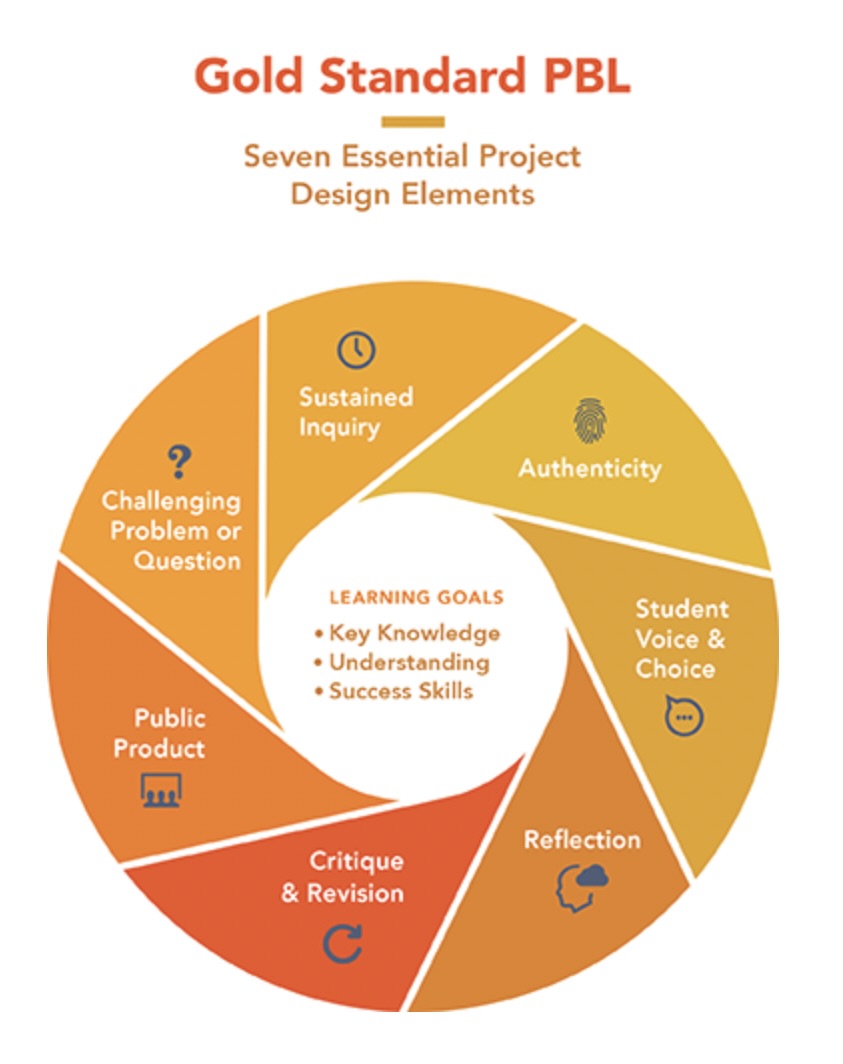
At its foundation, SK’s model of project-based learning is based upon the PBL Works Gold Standard frameworks for project-based learning design elements and teaching practices.

https://www.pblworks.org/what-is-pbl/gold-standard-project-design
https://www.pblworks.org/what-is-pbl/gold-standard-teaching-practices

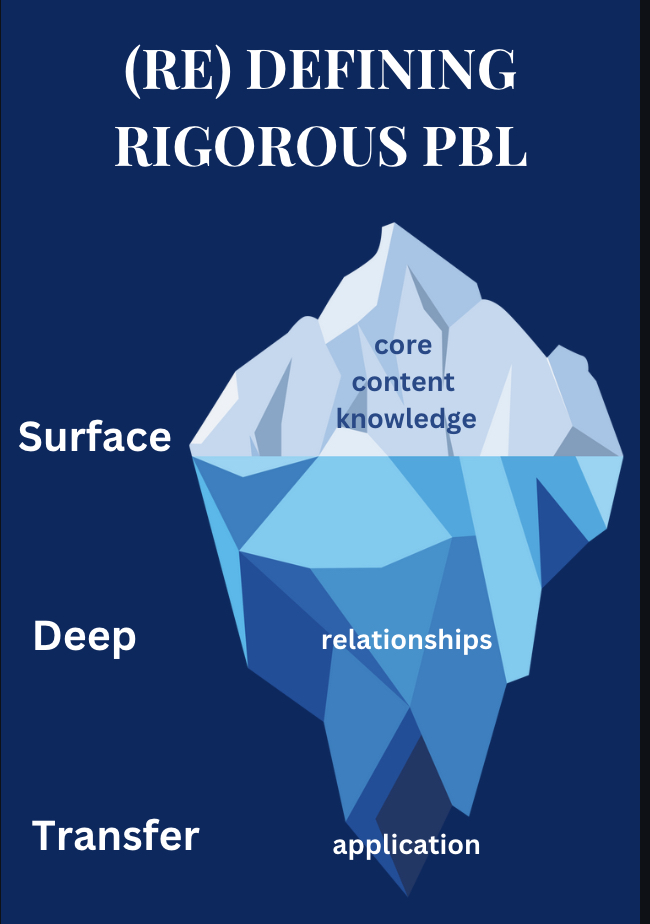
From this shared understanding of project-based learning – its components and the purposes of each component – SK teachers have amplified the rigor of their curriculum design and instruction through our shared study of The Project Habit: Making Rigorous PBL Doable.

Teachers creatively weave and integrate multiple content areas (e.g., science, literacy, social studies, math, music, art, languages) into four main projects over the course of a school year to provide students with rich learning opportunities. When planning, they begin by identify learning intentions at surface, deep, and transfer levels to ensure students are developing the knowledge they need to ask meaningful questions, draw connections between ideas, and transfer/apply their learning in authentic ways.

Students develop concepts, processes, skills, and strategies through project-based learning. The curriculum is the “what” and the instruction/learning is the “how.” And while teachers develop a curricular blue-print for each project or lesson, their instruction is responsive to the students with whom they work. In this way, teaching and learning are co-constructed in the moment by people (teachers and learners) who are situated within a sociocultural context and who engage with one another and an array of resources and materials to mediate teaching and learning.

Project-based learning is a truly human endeavor – it’s an active, co-construction of meaning through inquiry, relationship-building, encountering and overcoming obstacles, and applying knowledge in new and novel contexts. When students engage learning in this way, it’s meaningful and memorable.

Thinking Globally, Acting Locally

Prior to the school year, Summers-Knoll faculty and staff gather for our annual, two-week, August professional learning institute. During this time, we do a lot things: reconnect with one another, welcome our new faculty and staff, review our safety policies and procedures, set-up classrooms, and dive deeply into curriculum planning for the year. We take time to explore and discuss our school’s initiatives for the year, and with these initiatives in the foreground, teachers workshop their project ideas with one another to design and develop their year-long curricula.

As mentioned at our State of the School meeting last spring, in this 2024-25 school year, we’re working with the overarching themes of Global Competence and Climate Science.

Global competence is “the capacity and disposition to understand and act on issues of global significance” (Boix Mansilla & Jackson 2011). Globally competent students learn how to investigate the world beyond their immediate environment, recognize their own and others’ perspectives, communicate across differences, and take responsible action. As such, global competence begins with – and must be sustained by – an awareness and exploration of one’s own identity and who we are as individuals, but this sense of self is not cultivated in isolation or for the purpose of promoting individualism. On the contrary, an exploration of one’s own identity is meaningful only to the extent that it helps us better understand who we are in relation to other people and the role(s) we can play in the communities and world around us.

Studies and projects related to climate science provide a context in which globally competent students can take action on environmental and ecological issues. While the scope of a project can be highly local, such as making nutrient-rich compost for our own garden, the knowledge and skills students develop in such a project can transfer to – and impact – the health of the planet more broadly because soil is everywhere; it is literally the ground upon which we walk. Part of our work as educators is to help reframe conversations about climate science. It’s helpful to know Why Humans Are So Bad at Thinking About Climate Change so that, as educators and parents, we can help children recognize that our seemingly small efforts can have a cumulative effect.

There is power in numbers. As individuals acting collectively, we can make a positive difference in the short and long-term health of our planet. As Bodhi reminds us (photo above), simply put, we are a huge family.

Launching a New School Year

In my previous post, I reflected upon the transition that we find ourselves in at the end of a school year. Now here we are at the start of a new one.

The start of a new school year evokes memories from childhood: the crisp, unused new school supplies; a new lunchbox; new shoes. Moving on to the next grade or into a new class brings with it a sense of having “grown up” a bit, being “bigger.” We move from thinking that the world is us to recognizing that we are a part of a much larger world.

At Summers-Knoll school, at the start of the year and throughout, we focus on building community within and across classrooms. We are engaged in the endeavor of cultivating a school-wide culture of care, which includes learning how to play together, share, listen, and understand and respect diverse perspectives both within our classrooms and out in the world. We regard diversity – in all of its forms – as essential for growth, a socially and emotionally healthy community, for a truly abundant learning environment and ultimately, a rewarding life.

Learning how to function as a community of teachers and learners takes time. It’s a year-long project that begins with our professional development institute for teachers in August and goes all the way until our final days of professional development after the school year has concluded in June. It’s the bedrock of everything we do, and parents as our partners play a critical role in this project.

Here’s to another school year filled with the joy of learning and the realization of hidden potential!

« Older posts Newer posts »

© 2026 Carrie Symons, PhD

Theme by Anders NorenUp ↑